Posts tonen met het label A Clockwork Orange. Alle posts tonen

donderdag 6 november 2025

Malcolm McDowell over 'Fargo' en 'GoodFellas': zijn favoriete films


De Engelse acteur Malcolm McDowell is vooral bekend van zijn iconische vertolkingen in twee ophefmakende schandaalfilms uit de jaren 70:
- de jonge, gewelddadige sociopaat en bendeleider Alex De Large (één van de beste movie villains aller tijden) in het maatschappijkritische meesterwerk A Clockwork Orange uit 1971 (één van onze favoriete films) van Stanley Kubrick (onze favoriete regisseur);
- en de jonge, wrede Romeinse keizer Caligula (ook één van de beste movie villains aller tijden) in de biopic Caligula uit 1979 van Tinto Brass, Bob Guccione en Giancarlo Lui.  

In onderstaand interview legt Malcolm McDowell uit waarom Fargo zijn favoriete film is. Die schitterende zwarte misdaadkomedie dateert van 1996 en werd geschreven, geregisseerd en gemonteerd door de Amerikaanse broers Joel en Ethan Coen: een geniaal duo dat behoort tot onze favoriete regisseurs. Fargo behoort ook tot onze eigen favoriete films (ongeacht het genre) en tevens tot onze favoriete politiefilms en onze favoriete komediesBekijk een filmfragment hier en lees ons biografische portret van de gebroeders Coen uit 2013 hier.

Naar eigen zeggen, is ook GoodFellas één van McDowells favoriete films. Die briljante gangsterkroniek kwam uit in 1990 en werd geregisseerd  door de Amerikaanse meestercineast Martin Scorsese (ook één van onze favoriete regisseurs). Het scenario, dat Scorsese schreef in samenwerking met de Amerikaanse misdaadverslaggever Nicholas Pileggi, is gebaseerd op Pileggi's biografie Wiseguy: Life in a Mafia Family uit 1985 over het bewogen leven van de Amerikaanse gangster Henry Hill jr., die in de film gespeeld wordt door Ray Liotta. GoodFellas behoort ook tot onze eigen favoriete films (ongeacht het genre). Bekijk de trailer hier, filmfragmenten hier en hier, een making-of-documentaire hier, lees ons biografische portret van regisseur Martin Scorsese uit 2013 hier en ons In Memoriam over de in 2022 overleden hoofdrolspeler Ray Liotta hier.

Het beknopte interview met Malcolm McDowell over Fargo en GoodFellas kan u hieronder bekijken:


(Klik op de playbutton en dan rechtsonder bij instellingen op 360p voor hogere beeldkwaliteit)

vrijdag 28 juni 2024

Kubrick Remembered - documentaire


Kubrick Remembered is een boeiende documentaire uit 2014 van Gary Khammar over het leven en werk van de briljante Amerikaanse cineast Stanley Kubrick (1928-1999), onze favoriete regisseur.


(Klik op de playbutton en dan rechtsonder bij instellingen op "Kwaliteit" en op 720p of 1080p voor hogere beeldkwaliteit)


Genre: documentaire

zondag 28 oktober 2018


Tom Barman

van ijscoman tot dj 
in cinema Cartoon’s

             
Foto: © Walter Saenen.
             
dEUS-frontman viert 
40ste verjaardag van Antwerps filmhuis


De Antwerpse arthousebioscoop Cartoon’s in de Kaasstraat vierde vorige maand zijn 40ste verjaardag met een jubileumprogramma dat zowel nieuwe films als klassiekers omvatte. Zo ging daar op 21 september 2018 de digitaal gerestaureerde versie van de Antwerpse stadsfilm Any Way the Wind Blows uit 2003 in première. In deze film van de Antwerpse rockmuzikant en cinefiel Tom Barman speelt Eric Kloeck een hoofdpersonage. Kloeck is de vorig jaar overleden medeoprichter en bezieler van cinema Cartoon’s. Bovendien heeft Barman al sinds zijn tienerjaren een hechte band met Cartoon’s: "Ik heb er jarenlang gewerkt als kaartjesscheurder, barman, filmprojectionist, ijscoman, kassier en dj."

Interview door Joeri Naanai

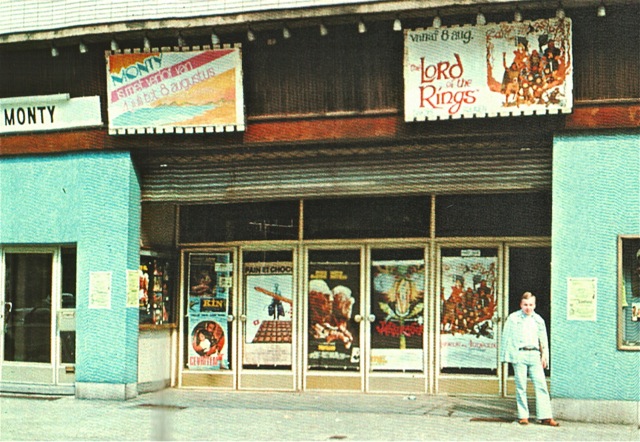
De Antwerpse cinema Monty in 1977.
De bewogen geschiedenis van cinema Cartoon’s begon in 1977: een jaar nadat de jonge Antwerpse cinefielen Michel Apers, Jan Jespers, Michel Vandeghinste, Dirk Geens en Eric Kloeck de oude cinema Monty in de Antwerpse Montignystraat getransformeerd hadden tot een drukbezocht arthousebioscoopje. Hun enige zaal in de Monty werd echter te klein. Daarom gingen zij op zoek naar extra zalen op een andere locatie in de Scheldestad. Zo ontdekten zij dat er in een oud gebouw in de Kaasstraat (ooit een chocolaterie) een privéclub met een cinemazaaltje bestond. Het clubje heette Cartoon’swerd geleid door de Antwerpenaar Guy Dandelooy en bestond uit bevriende hockeyspelers die er whisky dronken en sigaren rookten terwijl zij voor zichzelf films projecteren. De jongens van de Monty grepen hun kans toen bleek dat Cartoon’s zijn cinema wilde openstellen voor het brede publiek. En zo bundelen Monty en Cartoon’s hun krachten in een nieuw vennootschap: de n.v. Cartoon’s, die Antwerpen wilde laten kennismaken met nieuwe kunstzinnige of uitdagende films, klassiekers die zelden vertoond worden en stiefmoederlijk behandelde filmgenres zoals horror en fantasy.

Opening

Een oude reclame-affiche voor
het keldercafé van Cartoon's.
Na de transformatie van het oude gebouw in de Kaasstraat tot een volwaardige bioscoop met twee zaaltjes en een keldercafé, opende cinema Cartoon’s op 2 september 1978 voor het eerst zijn deuren. In zaal 1 beleefde de nieuwe Franse tragikomedie Pourquoi pas! (1977) van Coline Serreau toen haar Antwerpse première. In zaal 2 draaide de Amerikaanse Snoopy-tekenfilm A Boy Named Charlie Brown van Bill Melendez uit 1969, gevolgd door de Britse horroranthologie From Beyond the Grave van Kevin Connor uit 1974 met Donald Pleasance in de hoofdrol.

De rest is geschiedenis: onder leiding van de onvermoeibare programmator Eric Kloeck groeide cinema Cartoon’s uit tot de beste arthousebioscoop van ’t stad, met een derde zaaltje vanaf 1982. In de loop der jaren volgen faillissementen en overnames, maar Cartoon’s overleefde.

Cinema Cartoon's bevindt zich in de Kaasstraat,
om de hoek van het Antwerpse stadhuis.

Een filmschool voor Tom Barman

Tom Barman (rechts) regisseert Eric Kloeck (midden) en
 actrice Diane De Belder op de set van Any Way the Wind Blows.
Het voortbestaan van Cartoon’s is niet alleen te danken aan Eric Kloeck, maar ook aan zijn voormalige medewerkers. Eén van hen is Tom Barman (intussen 46).  Wanneer hij in Cartoon’s arriveert om samen met ons terug te blikken op zijn trouwe liefdesrelatie met deze kleine stadsbioscoop, komen Barmans jeugdherinneringen spontaan bovendrijven: "Ik was amper 17 toen ik eind jaren 80 wekelijks naar Cartoon's ging om er nieuwe creatieve films en klassiekers te zien die elders in ’t stad niet vertoond werden. Zo heb ik hier bijvoorbeeld Die Ehe der Maria Braun uit 1979 gezien. Dat was mijn eerste kennismaking met de films van Rainer Werner Fassbinder. Ik heb hier ook de films van Woody Allen ontdekt, zoals Manhattan uit 1979. Die film werd later één van de inspiratiebronnen voor mijn eigen stadsfilm Any Way the Wind Blows. In feite was Cartoon’s voor mij een filmschool. In ruil voor gratis toegang, begon ik er als vrijwilliger inkomkaartjes te scheuren. Toen ik 19 was, ging ik film studeren aan de kunstschool Sint-Lukas in Brussel. In mijn vrije tijd was ik straatmuzikant en verdiende ik wat bij als barman in het keldercafé van Cartoon’s. Daarna mocht ik van Eric Kloeck in de filmprojectiecabine aan de slag. In diezelfde periode kwam mijn muzikale carrière van de grond met de doorbraak van dEUS. Als cinefiel genoot ik ervan om tussendoor films te projecteren in Cartoon's. Tot ik er in 1993 een kras veroorzaakte op de filmpellicule van het Amerikaanse relatiedrama Indecent Proposal en Eric me prompt degradeerde tot kassier en verkoper van ijshoorntjes. (lacht) Dat incident vond zijn weg in Any Way the Wind Blows, wanneer het personage Walter, gespeeld door Frank Vercruyssen, ontslagen wordt als filmoperateur omdat hij een kras veroorzaakt zou hebben. Die scène werd trouwens gefilmd in Cartoon’s."

Tom Barman in Cinema Cartoon's.
Foto: © Walter Saenen.
In 1994 groeide dEUS, na de release van hun debuutalbum Worst Case Scenario, uit tot een internationale rockgroep met cultstatus. Maar Barman bleef trouw aan Cartoon’s. Zo organiseerde hij van 1993 tot 1999 onder de noemer Cartoon’s Tunes vaak drukbezochte muziekoptredens in het keldercafé: "Ik trad er soms op met dEUS en nodigde andere groepen uit, zoals Zita Swoon, Metal Molly, The Seatsniffers, Nemo en Evil Superstars. Tijdens de stomende afterparties stond ik vaak achter de draaitafel als dj, terwijl het publiek tot het ochtendgloren uit de bol ging op de dansvloer. Sommige feestneuzen speelden later mee als figuranten in de dynamische feestscène aan het eind van Any Way the Wind Blows."

Tom Barman regisseert de feestscène in zijn stadsfilm Any Way the Wind Blows.  

Eigenzinnig

Eric Kloeck in Any Way the Wind Blows.
Eric Kloeck kreeg van Barman een hoofdrol in Any Way the Wind Blows en speelde het personage Paul Garcin: een humeurige leraar met huwelijksproblemen. "Het norse karakter van dat personage had ik gebaseerd op Eric, die vaak grumpy was", grijnst Barman. "Maar hij had ook gevoel voor humor. De eerste keer dat ik van Eric ijshoorntjes en snoep moest verkopen in cinema Cartoon's, werd ik de zaal in gestuurd met de opdracht om daar hard te roepen: ‘Frisco’s, chocolade!’ Maar het publiek én Eric lachten me uit, want ik leek wel een marktkramer. Daar stond ik dan met mijn mandje Cornetto's. Uit medelijden met mij, kwam toen één bezoeker een ijsje bij me kopen. (lacht) Eric was een eigenzinnige kerel met een hoog rock-’n-rollgehalte. Dat hadden we gemeen. Hij vertoonde in Cartoon's graag uitdagende films, zoals het gewelddadige meesterwerk A Clockwork Orange van Stanley Kubrick en de sarcastische Belgische misdaadmockumentary C’est arrivé près de chez vous.” Daar kan uw verslaggever van meespreken, want wij zagen in Cartoon’s samen met een bevriend koppel ooit Henry: Portrait of a Serial Killer van John McNaughton uit 1986. Het was onze bedoeling om na afloop van die film samen gezellig na te praten in het toenmalige café ’t Oerwoud op de Suikerrui. Henry gooide echter roet in het eten: een briljante misdaadthriller, dat wel, die behoort tot onze favoriete films over seriemoorden en onze favoriete horrorfilms, maar na afloop van Henry waren wij zo geshockeerd door het realistische, bijna documentaire geweld en het nihilistische filmeinde dat wij in ’t Oerwoud zwijgend voor ons uit staarden. 

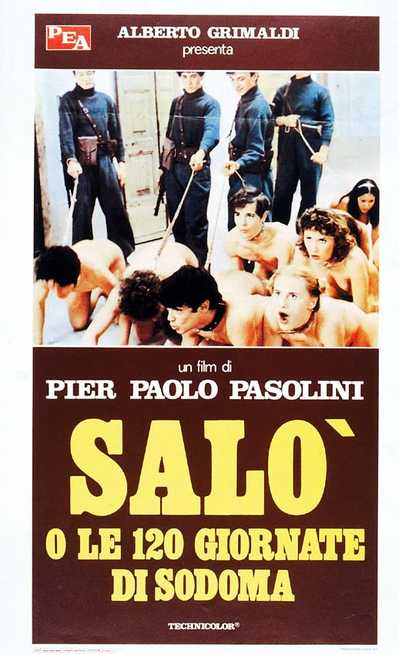
In 1986 durfde Kloeck de schandaalfilm Salò of de 120 dagen van Sodom (1975) van Pier Paolo Pasolini te vertonen in Cartoon’sDaarmee kreeg hij van de Antwerpse politie een proces-verbaal wegens zedenschennis aan zijn broek. 

"Erics filmsmaak week soms af van mijn smaak”, herinnert Barman zich. "Dat zorgde voor heroïsche discussies. Zo haatte Eric de films van Woody Allen, terwijl ik die passioneel verdedigde. Hij programmeerde ook vaak sociaal geëngageerde films, zoals Ladybird, Ladybird van Ken Loach uit 1994. Loach heeft goede films gemaakt, maar Ladybird, Ladybird was te melodramatisch en sloeg de toeschouwers plat met schrijnende miserie."

Gevraagd naar zijn favoriete films aller tijden, antwoordt Barman: Le samouraï van Jean-Pierre Melville, Le mépris van Jean-Luc Godard, La grande bellezza van Paolo Sorrentino, Jagten van Thomas Vinterberg en The Deer Hunter van Michael Cimino.”

Toekomstplannen

Sinds 2014 is cinema Cartoon’s eigendom van de Vlaamse filmdistributeur Lumière, die in de zomer van 2015 een beroep deed op twee net afgestudeerde Antwerpse studenten om Cartoon’s verder uit te baten: historicus Jan-Willem Van Eemeren (intussen 26) en socioloog Jon Michelena (intussen 27). Zij houden Cartoon’s vandaag nog steeds draaiend: "Eric Kloeck verliet Cartoon’s in 2007. Maar hij bleef betrokken tot 2013. Nu hij overleden is, willen wij zijn levenswerk niet verloren laten gaan. Cartoon’s moet een thuishaven blijven voor Antwerpse cinefielen die hun gading niet vinden in het commerciële aanbod van de grote multiplexen.”
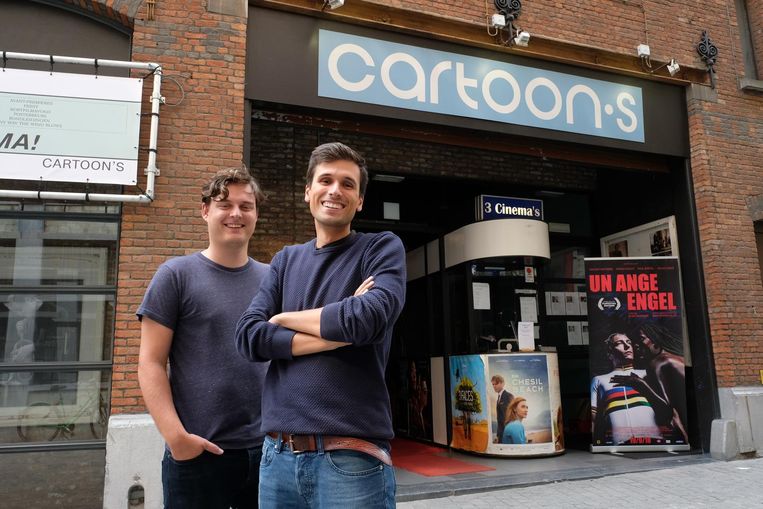
Jan-Willem Van Eemeren (links) en Jon Michelena.
Zij baten cinema Cartoon's nu al drie jaar uit.


Voor de recente 40ste verjaardag van cinema Cartoon’s werden aan de gevel drie calicots (geschilderde filmaffiches) van illustrator Jeroen Los opgehangen, die herinneren aan de tijd toen aan elke Antwerpse bioscoop nog reusachtige calicots hingen. "Antwerpen telde ooit ruim 100 bioscopen en werd het Hollywood aan de Schelde genoemd", mijmert Antwerpenaar Will Droogmans (62). "Ik werkte vanaf 1984 jarenlang als filmoperateur in de legendarische Cinema Rex op de Antwerpse De Keyserlei en, aan de overkant van de straat, in de bioscoop Calypso op de hoek van de Quellinstraat. Calypso werd in 1992 overgenomen door Kloeck, terwijl hij ook Cartoon’s draaiend hield. Dat waren mooie tijden."

Volgens de huidige uitbaters van cinema Cartoon’s is het Antwerpse filmlandschap intussen drastisch veranderd: "Vandaag kan je in Antwerpen alleen kiezen uit Kinepolis of UGC voor commerciële films en uit Cartoon's, Cinema Zuid, Filmhuis Klappei, de Roma of DE Studio voor degelijke klassiekers. Bovendien is Cartoon’s al jaren de enige Antwerpse bioscoop die consequent nieuwe alternatieve films vertoont. Die films worden vaak onvoldoende gepromoot door de filmstudio’s en distributeurs. Dan moeten wij zelf een tandje bijsteken. De handige digitalisering van het filmmedium zorgt weliswaar voor lagere kosten dan het vervoer en de projectie van grote rollen kwetsbare filmpellicule. De beeld- en geluidskwaliteit is ook stukken beter dan vroeger. Maar het blijft moeilijk om cinema Cartoon’s rendabel te houden. Wij vertonen immers geen commerciële blockbusters. Kloeck lokte hier soms volle zalen met alternatieve films zoals 37°2 le matin, Il postino en Le fabuleux destin d’Amélie Poulain, die elk ruim een jaar draaiden in Cartoon's. Maar dat waren uitzonderingen. Een arthousebioscoop uitbaten doe je uit liefde voor cinema, niet voor het geld."

Een screenshot uit het Franse romantisch drama 37°2 le matin.
Deze passionele film liep 60 weken in Cinema Cartoon’s
en redde de bioscoop in 1986 van het bankroet.


Antwerpenaar Will Droogmans werkt tegenwoordig als koerier van filmposters en andere promotiemateriaal voor Cartoon’s en een dozijn andere onafhankelijke bioscopen in Vlaanderen. "Hun aantal is de voorbije decennia echter fors afgenomen"zucht Will. "In heel Vlaanderen blijven er slechts 18 over, waarvan slechts zes bioscopen focussen op alternatieve films. Nederland daarentegen telt 117 onafhankelijke bioscoopjes." Hoe dat komt en wat in Vlaanderen gedaan kan worden om de toekomst van alternatieve cinema’s zoals Cartoon’s veilig te stellen, was op 29 september onderwerp van een publiek debat in het zogeheten Cartoon’s Innovation Lab.

Ook Tom Barman heeft toekomstplannen. Hij was onlangs in Portugal, waar hij in alle rust zijn scenario voor een nieuwe film aan het voltooien was: "Het scenario is nog niet af, maar het einde is in zicht. Het wordt een Engelstalige film noir met een misdaadplot en een romantische dimensie. De werktitel is Drop ShotHet productiehuis Savage Film, dat onder meer Rundskop van Michaël R. Roskam produceerde, zal optreden als producent. Laat ons hopen dat mijn nieuwe film gefinancierd geraakt. Wie weet wordt hij dan ooit vertoond in cinema Cartoon’s." (glimlacht) Op de vragen over de toekomst van zijn lievelingsbioscoop, heeft Barman trouwens een eenvoudig antwoord: "We moeten met z'n allen gewoon massaal naar Cartoon’s blijven gaan en inkomkaartjes kopen om er te kunnen blijven genieten van boeiende films.”

INFO:
Cinema Cartoon’s
Kaasstraat 46
2000 Antwerpen
03-232.96.32
www.cinemacartoons.be

zondag 29 oktober 2017


De kemels van 
Pauline Kael


Afgezien van de Amerikaan Roger Ebert, is er wellicht geen filmrecensent waar zo naar opgekeken wordt als diens landgenote Pauline Kael. Beiden zijn intussen overleden: Ebert stierf in 2013, Kael reeds in 2001. Over de doden niets dan goed, zegt men, maar ons moet toch van het hart dat wij de filmrecensies van Kael zwaar overroepen vinden. 


Roger Ebert.
Roger Ebert zat er ook vaak naast in zijn beoordelingen van films. Zo gaf Ebert bijvoorbeeld:
- slechts 2,5 (op vier) sterren aan de magistrale en iconische western Once Upon a Time in the West van Sergio Leone uit 1969 (onze favoriete western en één van onze favoriete films tout court; bekijk een filmfragment hier);
- slechts 2,5 sterren aan de uitstekende overlevingsthriller Deliverance van John Boorman uit 1972 (één van onze favoriete road movies; bekijk een filmfragment hier); 
- slechts 2,5 sterren aan de schitterende, oogstrelende en invloedrijke sword & sorcery-klassieker Excalibur van John Boorman uit 1981 (één van onze favoriete sword & sorcery-films);
- slechts 2,5 sterren aan de uitstekende en iconische horrorfilm The Thing van John Carpenter uit 1982 (één van onze favoriete horrorfilms);
- slechts 2,5 sterren aan de schitterende, vernieuwende en invloedrijke heist movie Reservoir Dogs van Quentin Tarantino uit 1992 (één van onze favoriete films; bekijk een filmfragment hier), wellicht het beste langspeelfilmdebuut sinds Citizen Kane van Orson Welles uit 1941;
- slechts 2 sterren aan het onderschatte tragiromantisch dorpsdrama Ryan's Daughter van David Lean uit 1970 (lees onze recensie met onze kritiek op Roger Eberts beoordeling hier);
- slechts 2 sterren aan het visionaire, maatschappijkritische meesterwerk A Clockwork Orange van Stanley Kubrick uit 1972 (één van onze favoriete sciencefictionfilms en één van onze favoriete films tout court; lees onze recensie hier);
- slechts 2 sterren aan de meeslepende, op historische feiten gebaseerde gevangenisbiopic Papillon van Franklin J. Schaffner uit 1973 (bekijk de hele film hier);
- slechts 2 sterren aan de iconische horrorklassieker The Texas Chain Saw Massacre van Tobe Hooper uit 1974 (één van onze favoriete horrorfilms en één van onze favoriete films over seriemoorden; bekijk de hele film hier);
- slechts 2 sterren aan de aangrijpende biopic The Elephant Man van David Lynch uit 1980;
- slechts 2 sterren aan de sfeervolle en succesvolle superheldenfilms Batman uit 1989 en Batman Returns uit 1992 (bekijk de hele film hier), beide geregisseerd door Tim Burton; 
- slechts 2 sterren aan de fijne romantische tragikomedie Edward Scissorhands van Tim Burton uit 1990;
- slechts 2 sterren aan de hilarische buddy-komedie Dumb and Dumber van Bobby en Peter Farrelly uit 1994 (één van onze favoriete komedies en tevens één van onze favoriete road movies);
- slechts 2 sterren aan het briljante en visueel verbluffende psychoseksuele neo noir misdaadmysterie Lost Highway van David Lynch uit 1997 (één van onze favoriete films; lees onze recensie hier en bekijk de hele film hier);
- slechts 2 sterren aan het beklijvende politiedrama Cop Land van James Mangold uit 1997 (één van onze favoriete politiefilms);
- slechts 2 sterren aan het meeslepende, knap in beeld gebrachte en razend populaire Romeinse epos Gladiator van Ridley Scott uit 2000 (één van onze favoriete historische drama's);
- slechts 1,5 ster aan de uitstekende romantische misdaadkomedie Raising Arizona van de gebroeders Coen uit 1987; 
- slechts 1,5 ster aan de fijne, veelzijdige familiekomedie Uncle Buck van John Hughes uit 1989;
- slechts 1 ster aan Le locataire (internationale Engelstalige titel: The Tenant) van Roman Polanski uit 1976, waarbij Ebert deze nochtans fascinerende psychologische mysteriethriller ten onrechte afkraakte als "not merely bad-it's an embarrassment (...) it's unspeakably disappointing";
- slechts 1 ster aan de briljante, visueel verbluffende en invloedrijke psychoseksuele neo noir misdaadthriller Blue Velvet van David Lynch uit 1986 (één van onze favoriete films; bekijk een filmfragment hier, de hele film hier, een interview met David Lynch over Blue Velvet hier en een video met Roger Eberts kritiek op Blue Velvet hier);
- 0 (ja nul) sterren aan de visionaire, religieus-erotische cultklassieker The Devils van Ken Russell uit 1971 (bekijk de hele film hier);
- en 0 sterren aan de spannende road action-misdaadthriller The Hitcher van Robert Harmon uit 1986 (één van onze favoriete films over seriemoorden; bekijk de hele film hier).

Daarom vinden wij ook Roger Eberts reputatie als de beste filmrecensent aller tijden niet echt verdiend. Maar hij had wél een schitterende pen, gaf blijk van groot inzicht in het filmmetièr en had het (gelet op zijn ruim 4.000 filmrecensies) meestal bij het rechte eind. Niets daarvan kan gezegd worden van Pauline Kael. 

Polemische zelfpromotie

In tegenstelling tot de missers van Ebert, waren de talrijke kemels van Kael niet louter misverstanden die voortvloeiden uit blinde vlekken in de appreciatie van uitdagende films, zoals bijvoorbeeld Eberts emotionele bezwaren tegen gewelddadige scènes. Terwijl bij Ebert altijd de films centraal stonden, ging het in de recensies van Kael onrechtstreeks vooral om Kael zelf. Haar argumenten om een film af te breken of de hemel in te prijzen waren vaak zo kunstmatig en vergezocht dat zij vooral wilde aantonen hoe origineel, eigenzinnig en moedig haar zienswijze wel was, ook al viel er vaak geen touw aan vast te knopen. En hoewel er op zich niets mis is met filmbesprekingen waarin de persoonlijkheid van de recensent doorschijnt en hij/zij sporadisch een autobiografische anekdote vertelt, vermits dat nu eenmaal onvermijdelijk is in een discipline die ook de persoonlijke visie en smaak van de recensent weerspiegelt, overschaduwde Kaels arrogante en aandachtszieke ego vaak de films die zij besprak. Haar recensies staan bol van allerlei provocerende en tegendraadse uitspraken, met inbegrip van ad hominem beledigingen aan het adres van onder anderen cineasten en acteurs, die vaak meer zeggen over Kaels eigen snobisme, pseudo-scherpzinnigheid en twistzieke zelfpromotie dan over die films. Of in de woorden van de Amerikaanse auteur Alan Vanneman: “All her life Kael wrote as a brilliant schoolgirl, straining for ‘insights’ and exulting in ‘nuances’ that no one else noticed (because they weren’t there). She had to be deeper, more profound, and more shocking than anyone else, which led her to the same sort of pretentiousness she ridiculed in others.” Op die manier verborg Kael, die het kijkplezier van haar lezers bovendien heel vaak verpestte met schaamteloze spoilers, dat zij in feite veel minder verstand had van het medium film dan haar (onterechte) status als één van de meest gerespecteerde en invloedrijke filmrecensenten suggereert.

Pauline Kael.

Gebakken lucht

Geukkig zijn er intussen steeds meer cinefielen die Kaels oeuvre doorprikken als gebakken lucht. Zo noemde de New Yorkse auteur Alex Sheremet haar hier terecht "one of film’s worst and most ridiculous critics (...) for all she’s written, and has been written of her, Pauline Kael was not much of a critic, combining the worst flaws of Roger Ebert (over-reliance on emotion) with none of his writing ability, and a pointless viciousness and personal vindictiveness that — had it been well-worded — could have at least been fun. It is not, and as the sudden implosion and inevitable decline of her progeny Armond White shows, it pays more to be right than righteous, a difference few people ever see, and fewer still can ever act on." 

Dat blijkt ook uit onze demythologiserende bloemlezing van Pauline Kaels absurde kemels hieronder:

Bloemlezing 


- Pauline Kael over de visueel verbluffende en uiterst invloedrijke psychosociale karakterstudie Citizen Kane (1941) van Orson Welles, wellicht het beste langspeelfilmdebuut aller tijden: "it isn’t a work of special depth or a work of subtle beauty. It is a shallow work (...) it is conceived and acted as entertainment in a popular style (...) so overwrought in style as to be almost a Gothic comedy. What might possibly be considered tragic in it has such a Daddy Warbucks quality that if it’s tragic at all it’s comic-strip tragic. The mystery in 'Kane' is largely fake, and the Gothic-thriller atmosphere and the Rosebud gimmickry (though fun) are such obvious penny-dreadful popular theatrics (...) 
without much resonance, and certainly without much tragic resonance. (...) The conceptions are basically kitsch; basically, 'Kane' is popular melodrama—Freud plus scandal, a comic strip (...) full of flaws". Bekijk een filmfragment uit Citizen Kane hier.

- Pauline Kael over het visueel verbluffende tragiromantisch balletdrama The Red Shoes (1948) van Michael Powell en Emeric Pressburger, een meesterwerk dat door vele cinefielen, ook door ons, beschouwd wordt als de mooiste dansfilm aller tijden: "Blubbery and self-conscious (...) high kitsch". Lees onze eigen recensie van The Red Shoes hier, bekijk een filmfragment hier en de hele film hier.

- Pauline Kael over de boeiende, maatschappijkritische mediasatire Ace in the Hole (1951) van Billy Wilder: "it's really just nasty, in a sociologically pushy way." Bekijk de hele film hier.

- Pauline Kael over de avontuurlijke, visueel verbluffende en invloedrijke western The Searchers (1956) van John Ford: "It's a peculiarly formal and stilted movie (...) it isn't very enjoyable (...) The lines are often awkward and the line readings worse, and the film is often static (...) many crude and corny touches (...) Ford's attempts at comic relief are a fizzle". The Searchers behoort tot onze favoriete westerns en onze favoriete road movies.

- Pauline Kael over het beklijvende en knap in beeld gebrachte anti-oorlogsdrama Paths of Glory (1957) van Stanley Kubrick, één van de beste anti-oorlogsfilms aller tijden: "Watching it is very frustrating: Kubrick, who wrote the script with Calder Willingham and Jim Thompson, doesn't leave you with anything." Bekijk de hele film hier.

- Pauline Kael over het briljante, visueel verbluffende en invloedrijke misdaadmysterie Vertigo (1958) van Alfred Hitchcock: "stupid". Vertigo wordt door de meeste filmkenners beschouwd als één van de beste films aller tijden en behoort tot onze favoriete films (ongeacht het genre). Ook de getalenteerde Amerikaanse cineast William Friedkin was een bewonderaar van Vertigo. Bekijk de knappe begingeneriek van Saul Bass hier en een analyse van het symbolische kleurgebruik in Vertigo hier.

- Pauline Kael over het magistrale woestijnavontuur Lawrence of Arabia (1962) van David Lean, een visueel meesterwerk dat niet alleen behoort tot de beste historische avonturendrama's en antikoloniale oorlogsfilms, maar ook tot de beste biopics en karakterstudies aller tijden, met Peter O'Toole in zijn veelzijdige, schitterende titelrol van de Britse kolonel en diplomaat Thomas Edward Lawrence: "I wish it had never been made. (...) this picture fails to give an acceptable interpretation of Lawrence, or to keep its action intelligible (...) Why couldn't they just have written a story about the desert and filmed it? Why must they muck up the past, oversimplify history, and use their post-Freudian insights to turn a great leader of men, and a great writer into a narcissist and sadist with a Christ complex?" Lawrence of Arabia is één van onze favoriete historische drama's, één van onze favoriete road movies en één van onze favoriete films tout court (ongeacht het genre). Bekijk de hele film hier.

- Pauline Kael over de boeiende en uiterst succesvolle psychosociale horrorthriller The Birds (1963) van Alfred Hitchcock: "terrible (...) pointless and incomprehensible (...) the effects take over in this Hitchcock scare picture, and he fails to make the plot situations convincing. The script (by Evan Hunter) is weak, and the acting is so awkward that often one doesn't know how to take the characters." Bekijk de hele film hier.

- Pauline Kael over de schitterende spaghettiwestern The Good, the Bad and the Ugly (1966) van Sergio Leone, één van de beste en meest iconische westerns aller tijden: "the Western theme is missing." The Good, the Bad and the Ugly behoort tot onze favoriete westerns en onze favoriete road movies. Bekijk de knappe begingeneriek hier en de hele film hier.

- Pauline Kael over het fascinerende en invloedrijke mysterie Blow-Up (1966) van Michelangelo Antonioni: "reminds one of so many naïvely bad experimental films (...) Antonioni, like his fashion-photographer hero, is more interested in getting pretty pictures than in what they mean. But for reasons I can’t quite fathom, what is taken to be shallow in his hero is taken to be profound in him (...) pompous platitudes (...) so much confused symbolism and such a heavy sense of importance (...) this movie is so ill-formed (...) simply exploits the ready-made symbolic meanings people attach to certain details and leaves us in a profound mess. (The middlebrow moralists think it’s profound and the hippies enjoy the mess)". Bekijk de hele film hier.

- Pauline Kael over het unieke, visueel verbluffende en uiterst invloedrijke sciencefictionepos 2001: A Space Odyssey (1968) van Stanley Kubrick: "it’s fun to think about Kubrick really doing every dumb thing he wanted to do, building enormous science fiction sets and equipment, never even bothering to figure out what he was going to do with them (...) stupid stuff (...) a kind of super sci-fi nut’s fantasy (...) amateur movie (...) the most gloriously redundant plot of all time (...) It isn’t accidental that we don’t care if the characters live or die; if Kubrick has made his people so uninteresting, it is partly because characters and individual fates just aren’t big enough for certain kinds of big movie directors. (...) It's a monumentally unimaginative movie"2001: A Space Odyssey wordt door heel wat filmkenners beschouwd als één van de beste films aller tijden en behoort tot onze favoriete sciencefictionfilms en onze favoriete films tout court (ongeacht het genre). Lees onze eigen recensie van 2001: A Space Odyssey hier, bekijk de trailer hier en een filmfragment hier.  

- Pauline Kael over de schitterende, veelzijdige western Butch Cassidy and the Sundance Kid (1969) van Arthur Penn: "a glorified vacuum. (...) I thought that many of the scenes in it were inept or awful, and that several of the big set pieces were expendable (to put it delicately). (...) Conceptually, it’s unformed (...) after a few minutes of Butch Cassidy and the Sundance Kid, I began to get that depressed feeling, and, after a half hour, felt rather offended. (...) rings false (...) It’s a facetious Western (...) The director, George Roy Hill, doesn’t have the style for it. (He doesn’t really seem to have the style for anything (...) The tone becomes embarrassing. (...) Goldman’s script is jocose; though it reads as if it might play, it doesn’t (...) The dialogue is all banter, all throwaways, and that’s how it’s delivered; each line comes out of nowhere, coyly, in a murmur, in the dead sound of the studio. (There is scarcely even an effort to supply plausible outdoor resonances or to use sound to evoke a sense of place.) It’s impossible to tell whose con­sciousness the characters are supposed to have. (...) it’s all so archly empty (...) It’s all posh and josh, without any redeeming energy or crudeness. (...) damned waggishness." Butch Cassidy and the Sundance Kid behoort tot onze favoriete westerns. Bekijk een filmfragment hier.

- Pauline Kael over het onderschatte tragiromantisch dorpsdrama Ryan's Daughter (1970) van David Lean: "a cheap romance (...) gush made respectable by millions of dollars 'tastefully' wasted (...) The emptiness of Ryan's Daughter shows in practically every frame". Lees onze eigen recensie van Ryan's Daughter hier

- Pauline Kael over het visionaire, maatschappijkritische meesterwerk A Clockwork Orange (1971) van Stanley Kubrick: "it has no depth (...) done in such a slow, heavy style (...) self-important (...) corrupt (...) an abhorrent viewing experience (...) offensive (...) it has no shadings. Kubrick, a director with an arctic spirit, is determined to be pornographic, and he has no talent for it. (...) terrible performances from everybody but McDowell (...) portentous (...)  Many of the dialogue sequences go on and on, into a stupor of inactivity. (...) at times you feel as if you were trapped in front of the frames of a comic strip for a numbing ten minutes per frame. (...) the purest exploitation (...) sucking up to the thugs in the audience". A Clockwork Orange behoort tot onze favoriete sciencefictionfilms en onze favoriete films tout court (ongeacht het genre). Lees onze eigen recensie van A Clockwork Orange hier.

- Pauline Kael over de briljante, realistische en invloedrijke politiefilm The French Connection (1971) van William Friedkin, die door de meeste cinefielen beschouwd wordt als één van de beste politiefilms aller tijden: "It is, I think, what we once feared mass entertainment might become: jolts for jocks. There's nothing in the movie that you enjoy thinking over afterward (...) sloppy plotting (...) full of holes, but mostly you're too stunned to notice them (...) total commercial opportunism (...) meaningless (...) the movie can be seen as justifying police brutality". The French Connection behoort tot onze favoriete politiefilms
Lees onze eigen recensie hier en bekijk de trailer hier

- Pauline Kael over de invloedrijke horrorklassieker en kaskraker The Exorcist (1973) van William Friedkin, één van de beste, meest angstaanjagende en succesvolle griezelfilms aller tijden: "It's an obtuse movie (...) A viewer can become glumly anesthetized by the brackish color and the senseless ugliness of the conception. (...) in the worst imaginable taste (...) unpleasant (...) it’s entirely mechanical and impersonal (...) there's nothing the actors can do with the juiceless stock roles (...) tiresomely moralistic (...) It’s all so tired that we can keep going only on fresh atrocities. (...) the picture is in a slugging, coercive style. (...) As a movie, The Exorcist is too ugly a phenomenon to take lightly. (...) of no taste and no imagination (...) can’t muster up any feeling (...)  Neither the producer-writer, William Peter Blatty, nor the director, William Friedkin, shows any feeling for the little girl's helplessness and suffering, or for her mother's. (...) Aren't those who accept this picture getting their heads screwed on backward?". The Exorcist behoort tot onze favoriete horrorfilms. Bekijk de trailer hier.

- Pauline Kael over het poëtische meesterwerk Badlands (1973) van Terrence Malick, een als road movie en misdaaddrama verpakte tragiromantische ode aan liefde en vrijheid: "
draggy art (...) so cold and formal (...) condescending (...) An intellectualized movie (...) so preconceived that there's nothing left to respond to (...) I didn’t admire it, I didn’t enjoy it, and I don’t like it". Badlands behoort tot onze favoriete road moviesonze favoriete films over seriemoorden en onze favoriete films tout court (ongeacht het genre).

- Pauline Kael over het avontuurlijke en visueel verbluffende historisch kostuumdrama Barry Lyndon (1975) van Stanley Kubrick: "By Kubrick’s insistence that this is a piece of wisdom that must be treated with Jansenist austerity and by his consequent refusal to entertain us, or even to involve us, he has made one of the vainest of all movies. He suppresses most of the active elements that make movies pleasurable (...) It’s a coffee-table movie; we might as well be at a three-hour slide show for art-history majors. (...) Obviously, Stanley Kubrick does not have a gift for sensual fury (...) he’s indifferent to the possibilities in the interaction of images and doesn’t build his sequences by editing (...) inert (...) the music might as well be embalming fluid. (...) it’s essentially a bloodless, elongated version of a thirties costume picture (...) I wish Stanley Kubrick would come home to this country to make movies again, working fast on modern subjects — maybe even doing something tacky, for the hell of it.". Barry Lyndon behoort tot onze favoriete historische drama's en onze favoriete road moviesBekijk een filmfragment hier.

- Pauline Kael over het 
oogstrelend drama Days of Heaven (1978) van Terrence Malick: "The film is an empty Christmas tree: you can hang all your dumb metaphors on it. (...) The movie suffers from too many touches, too many ideas that don't grow out of anything organic."

- Pauline Kael over het briljante psychosociaal anti-oorlogsdrama The Deer Hunter (1978) van Michael Cimino: "enraging, because, despite its ambitiousness and scale, it has no more moral intelligence than the Clint Eastwood action pictures. (...) Cimino doesn’t know how to reveal character, develop it, or indicate what’s going on in a human relationship. (...) a small-minded film (...) Cimino’s technique has pushed him further than he has been able to think out. His major characters don’t articulate their feelings; they’re floating in a wordless, almost plotless atmosphere, and their relations aren’t sharp enough for us to feel the full range of the film’s themes. Too many of the motifs are merely symbolic — are dropped in rather than dramatized. At times, we feel that we’re there to be awed rather than to understand." Bekijk de hele film hier.

- Pauline Kael over het visueel verbluffende meesterwerk Apocalypse Now (1979) van Francis Ford Coppola, volgens ons de beste (anti-)oorlogsfilm aller tijden: "Part of the wide-spread anticipation of Apocalypse Now was, I think, our readiness for a visionary, climactic, summing-up movie. We felt that the terrible rehash of pop culture couldn’t go on, mustn’t go on — that something new was needed. Coppola must have felt that, too, but he couldn’t supply it. His film was posited on great thoughts arriving at the end — a confrontation and a revelation. And when they weren’t there, people slunk out of the theaters, or tried to comfort themselves with chatter about the psychedelic imagery. Trying to say something big, Coppola got tied up in a big knot of American self-hatred and guilt, and what the picture boiled down to was: White man—he devil. Since then, I think, people have expected less of movies and have been willing to settle for less.”  Eén van de meest iconische sequenties in Apocalypse Now is de aanval van Amerikaanse legerhelikopters op een Vietnamees kustdorpje, terwijl de muziek van Richard Wagners Ritt der Walküren (Ride of the Valkyries) weerklinkt. Regisseur Francis Ford Coppola herinnert zich naar eigen zeggen dat Pauline Kael hem had geadviseerd om die muziek niét te gebruiken in de film: "I did meet her a couple of times before I tried to make Apocalypse Now, and I remember very vividly that she warned me to not use the Wagner Ride of the Valkyries for the helicopter battle because it had been used also in Lina Wertmuller's film Seven BeautiesAnd she said that it was so effective in that, that you'd be making a big mistake to use it because people will just, whenever they saw it, they will refer to Seven BeautiesAnd I said "Well, you know," I said, "I don't know, maybe, but it depends. If it works as planned, then when they think of it, they'll think of Apocalypse Now." Coppola had natuurlijk gelijk en gelukkig volgde hij Kaels advies niét. Apocalypse Now behoort tot onze favoriete road movies en onze favoriete films tout court (ongeacht het genre). Bekijk een filmfragment hier en commentaar van hoofdrolspeler Martin Sheen op zijn aangrijpende openingsscènes hier.

- Pauline Kael over het gevoelige, sfeervolle en visueel verbluffende tragiromantisch kostuumdrama Tess (1979) van Roman Polanski, gebaseerd op de mooie feministische roman Tess of the d'Urbervilles. A Pure Woman uit 1891 van de Engelse schrijver Thomas Hardy: "The movie is a sustained feat of male breast-beating (...) you’re watching nothing. (...) The picture is tame (...) The story hasn’t been dramatized (...) Everything is subdued, blended. (...) Polanski's Tess is Hardy's 'Tess of the D'Urbervilles' under sedation." Tess behoort tot onze favoriete historische drama's en onze favoriete road moviesBekijk een filmfragment hier en de hele film hier.

- Pauline Kael over de briljante en 
visueel verbluffende psychologische horrorthriller The Shining (1980) van Stanley Kubrick: "though we may admire the effects, we’re never drawn in by them (...) When we see a flash of bloody cadavers or observe a torrent of blood pouring from an elevator, we're not frightened, because Kubrick’s absorption in film technology distances us. (...) he keeps the scenes going for so long that any suspense dissipates. (...) by the climax, when we’re running around in the hedge maze on the hotel grounds, the rhythmic sameness has worn us down. It’s like watching a skater do figure eights all night, or at least for two hours and twenty-six minutes. (...) We go to The Shining hoping for nasty scare effects and for an appeal to our giddiest nighttime fears—va­porous figures, shadowy places. What we get doesn’t tease the imagination. Visually, the movie often feels like a cheat (...) Kubrick uses Nicholson in the most obvious way. (...) There’s no surprise in anything he does, no feeling of invention. This is true of everyone in the film (...) since we are not drawn in, we’re not effectively dis­oriented—just fed up. We wait for revelations—the events that will connect the different types of parapsychological phenomena we’ve been observing— and since we don’t get those revelations, the picture seems not to make any sense. So when, at the very end, we’re hit over the head with reincarnation, it has no emotional resonance. It just seems like a dumb finish. (...) we don’t know how to read Kubrick’s signals; it may be that he simply doesn’t know us well enough anymore to manipulate us successfully. Again and again, the movie leads us to expect something—almost promises it—and then disappoints us. (...) We’re starved for pleasure at this movie". The Shining behoort tot onze favoriete horrorfilms, onze favoriete films over seriemoorden en onze favoriete films tout court (ongeacht het genre). Bekijk de trailer hier en de hele film hier.

- Pauline Kael over de schitterende
psychosociale bokserbiopic Raging Bull (1980) van Martin Scorsese, een visueel meesterwerk dat behoort tot de beste sportdrama's, biopics, familiedrama's en karakterstudies aller tijden: "Jake says, 'You dumb f— k,' and Joey says, 'You dumb f—k,' and they repeat it and repeat it. And I think. What am I doing here watching these two dumb f—ks? (...) there’s nothing under the scenes—no subtext (...) the way the story is told Jake’s life pattern doesn’t make much sense (...) Even the black and white is macho (...) banality (...) loses the lowlife entertainment value of prizefight films (...) aestheticizes pulp". Bekijk een filmfragment uit Raging Bull hier.

- Pauline Kael over het meeslepende en uiterst populaire archeologische actie-avontuur Raiders of the Lost Ark (1981) van Steven Spielberg, één van de beste en meest iconische avonturenfilms aller tijden: "
there’s no exhilaration in this dumb, motor excitement. (...) it isn’t beautifully made (...) klunky music (...) the script doesn’t seem worked out. (...) The actors are mostly just bodies carrying pieces of plot around. They sound as if they were ordered to read their dialogue on the run (...) 'Raiders' is timid moviemaking: the film seems terrified of not giving audiences enough thrills to keep them happy. (...) plot for its own sake, dissociated from character or drama (...) pulp-repulped (...) Spielberg fumbles a lot of his action sequences (...) some of the episodes are simply tired (...) Seeing 'Raiders' is like being put through a Cuisinart—something has been done to us, but not to our benefit."

- Pauline Kael over de briljante, visueel verbluffende en uiterst invloedrijke tech-noir cyberpunk sciencefictionklassieker Blade Runner (1982) van Ridley Scott: "we're always aware of the sets as sets (...) what we see doesn't mean anything to us. (...) Ridley Scott isn’t great on mise en scène (...) we’re not caught up in the pulpy suspense plot (...) this film seems indifferent, blasé (...) The dialogue isn’t well handled, either. Scott doesn’t seem to have a grasp of how to use words as part of the way a movie moves. Blade Runner is a suspenseless thriller (...) At some point, Scott and the others must have decided that the story was unimportant (...) Blade Runner doesn’t engage you directly; it forces passivity on you. (...) it's just something unpleasant or ugly. (...) Rutger Hauer brings the wrong kind of intensity to the role (...) the whole movie gives you a feeling of not getting anywhere. (...) inertia made glamorous. (...) the movie doesn’t pull the plot strands together (...) musty (...) this movie loses track of the few expectations it sets up, and the formlessness adds to a viewer’s demoralization—the film itself seems part of the atmosphere of decay Blade Runner has nothing to give the audience (...) It hasn’t been thought out in human terms. If anybody comes around with a test to detect humanoids, maybe Ridley Scott and his associates should hide. With all the smoke in this movie, you feel as if everyone connected with it needs to have his flue cleaned." Blade Runner behoort tot onze favoriete sciencefictionfilmsLees onze eigen recensie hier en bekijk de trailer hier.

- Pauline Kael over de uitstekende tragikomedie The King of Comedy (1982) van Martin Scorsese, met een topvertolking van Robert De Niro in zijn memorabele hoofdrol van de would-be-komiek Rupert Pupkin die zijn populaire idool Jerry Langford (gespeeld door Jerry Lewis) hardnekkig stalkt: "isn't an ordinary kind of bad movie. It's so -deliberately- quiet and empty that it doesn't provide even the dumb, mind-rotting diversion that can half amuse audiences at ordinary bad movies. (...) The plot is small-scale - material for a sketch, dragged out.  (...) Rupert is as boring to us as he is to Langford. (...) De Niro's performance -from the Nobody's-Home school of acting- is of a piece with Scorsese's whole conception of the film. (...) this movie reduces everybody to crud. (...)  the possibility that our feelings might be engaged -that we might think we were at an ordinary movie- has to be stepped on. (...) Scorsese must have decided to give us the creeps. The shots are held so long that we look for more in them than is there. (...) a chore to watch (...) characters who are pitifully incapable of sustaining our interest, and that leaves a vacancy. (...) the film turns indecisive and fumbling toward the end (...) no fire (...) glaring emptiness (...) a training film for pests, and worse." The King of Comedy behoort tot onze favoriete komedies. Bekijk de hele film hier.

- Pauline Kael over het uitstekende rechtbankdrama The Verdict (1982) van Sidney Lumet, met Paul Newman in zijn briljante glansrol van een drankzuchtige en aan lager wal geraakte advocaat in gewetensnood: "Lumet's admiration of (Paul Newmans) acting weighs Newman down; so does Mamet's (deliberately) stale and repetitive language. Newman has a limited palette here (...) his lines work on only one level—at times, this makes him seem like a cartoon trying to think. It's a bowed-down, sorrowful-sot performance—a tired old show-business view of "a good man." (...) it's dragged out so self-importantly". Volgens de meeste cinefielen, wijzelf inbegrepen, is The Verdict één van de beste rechtbankdrama's en karakterstudies in de filmgeschiedenis. Bekijk de hele film hier.

- Pauline Kael over de uitstekende en iconische horrorfilm The Thing (1982) van John Carpenter uit 1982: "Alien was effective. This picture isn't (...) It appears to be a film of limited imagination (...) Carpenter seems indifferent to whether we can tell the characters apart; he apparently just wants us to watch the apocalyptic devastation." The Thing is één van onze favoriete horrorfilms.

- Pauline Kael over de schitterende historische gangsterkroniek Once Upon a Time in America (1984) van Sergio Leone, één van de beste gangsterfilms aller tijden: "Leone doesn’t bother to develop the characters (...) Leone’s vision of Jewish gangsters is a joke." Bekijk 
een filmfragment uit Once Upon a Time in America hier en de hele film hier.

- Pauline Keal over de uitstekende en iconische coming-of-age-scholierenkomedie The Breakfast Club (1985) van John Hughes: "schematic plot (...) the scenes involving the snotty, callous dean ring false right from the start, and though Paul Gleason seems miscast, maybe anybody playing this villain would seem miscast. Judd Nelson's role as the catalyst-rebel—the working-class kid who's good with his hands (he loves shop), and is also a hipster, and fearless—is a dud, too. And Nelson doesn't seem to have a speck of spontaneity. After his early scenes, he becomes too self-pitying (...) all that this encounter-session movie actually does is strip a group of high-school kids down to their most banal longings to be accepted and liked." The Breakfast Club behoort tot onze favoriete komedies. Bekijk een filmfragment hier

- Pauline Kael over de briljante biopic en gangsterkroniek GoodFellas (1990) van Martin Scorsese, één van de allerbeste gangsterfilms aller tijden: "Is it a great movie? I don’t think so. (...) What’s missing? Well, there are no great voices. The script, by Pileggi and Scorsese, isn’t really dramatized (...) Scorsese doesn’t weight the incidents dramatically; he leaves the themes, and even the story, lying there inert. (...) The picture has scope rather than depth. (...) the three major hoods, played by Liotta, De Niro, and Pesci (...) don’t have a strong enough presence. (...) these sociopaths are conceived shallowly, the way they used to be in B pictures. (It wasn’t just the low budgets that were evoked by the term 'B picture'; it was also the unmemorable characters.) (...) these actors seem too old for their parts (...) this picture doesn’t have the juice and richness that come with major performances. It has no arc, and doesn’t climax; it just comes to a stop." GoodFelllas is niet alleen onze favoriete gangsterfilm, maar behoort ook tot onze favoriete films tout court (ongeacht het genre). Bekijk de trailer hier en een filmfragment hier.

- Pauline Kael over de commerciële draak Dirty Dancing (1987) van Emile Ardolino: "you come out of the theatre giggling happily."


Joeri Naanai